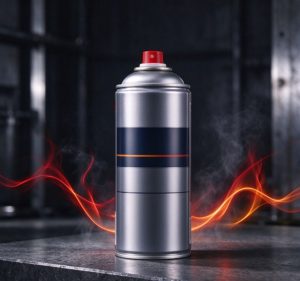
High-temperature coatings offer thermal protection of metallic surface materials under high temperature conditions in various uses related to transport, industry, building and maintenance. For importers, wholesalers, distributors and buyers under private labeling, buying decisions concerning high temperature spray paint are not only about comparison based on costs but also on considerations such as temperature endurance, longevity of the coating, suitability of the substrate, packaging and supplier reliability.
The United Arab Emirates, Brazil, Mexico, Chile, Argentina, Peru, Venezuela, and Colombia present potential markets due to the automotive spare parts providers, metallurgy, industry maintenance businesses and machinery repair services.
However, purchase specifications vary in accordance with local industries and applications. This guide presents the essential product specifications, market potential and supplier standards for B2B buyers.
Understanding High Temperature Spray Paint Specifications
Selecting an appropriate paint involves knowledge of its properties and specifications. A coating that is suitable for heating to average temperature might not be able to cope with higher temperatures. It is essential to analyze its real performance based on documents and not just on marketing information.
1. Temperature Resistance
First, temperature resistance plays a key role in selecting a paint product. Some paints can work under high temperature conditions, while others can operate only at average temperature.
It is important for customers to differentiate between continuous and short-term peak temperatures. Moreover, customers must check whether particular curing is required for this rating.
Customers must ask for documents confirming maximum temperature, intended application, and curing process before placing an order. It will reduce the number of products inappropriate for distribution.
2. Surface Compatibility and Preparation
Heat resistant spray coatings are generally applied to compatible metal surfaces, which may include particular exhaust system components, engine related components, industrial housings, equipment parts.
Oil, grease, rust, loose coatings can decrease the adhesion of the material. Therefore, surface preparation is required. Some materials can be sprayed on a properly prepared metal surface, while other materials require a special primer.
Wholesalers have to check recommendations regarding cleaning procedure, limitations in terms of substrate compatibility and application procedure. Technical information will allow end users to work effectively.
3. Finish and Coating Performance
High temperature capability is not sufficient for product to be useful. Adhesion, finish uniformity, thermal cycling capability and corrosion resistance can also be important characteristics.
Most popular finishes are matte black and silver. But available colors depend on producer’s range. Buyers need to check if chosen formulation is applicable for intended part.
In case of wholesale orders buyers have to ask for samples and technical data sheets. If corrosion resistance is important, buyers need to check if certain product has required corrosion resistance.

Market Opportunities Across Eight Target Countries
Various markets could benefit from various applications and methods of distribution. The importers should first ascertain demand among local consumers in order to decide on what temperature ratings, finishes, and packaging types to carry.
1. UAE: Automotive and Industrial Maintenance
UAE can provide sales channels through automotive repair centers, industrial maintenance centers, equipment maintenance centers, and metal fabrication centers. Heat-resistant paints could be applicable for appropriate exhaust systems, metal enclosures, and selected industrial parts.
High environmental temperatures mean that it is essential to plan carefully for storage, although the temperature alone should not define the necessary coating temperature rating. The buyer needs to take into account the temperature of the coated part.
The distributors can take advantage of clear specifications, tough packaging, and English-Arabic labeling.
2. Brazil: Automotive Aftermarket and Metalworking
Brazilian automotive aftermarket and metalworking industries represent opportunities for coatings that are resistant to heat. The potential customers in Brazil include automotive parts distributors, repair shops, paint wholesalers and industrial suppliers.
Spray performance, drying properties and final appearance can affect repeat sales. Product information provided in Portuguese will be helpful in understanding the application capabilities and curing methods of the product.
The potential buyers should check the claims about the product and assure themselves that the packaging meets Brazilian regulations for importing and distributing the products.
3. Mexico: Automotive and Industrial Applications
Potential sales of special coatings through Mexico’s automotive supply chains, repair companies and industrial activities can be achieved by selling the aerosols.
Different applications require different coatings. For instance, a coating used for a motorcycle exhaust pipe has other requirements than one used for an industrial part.
Distributors should select products with clearly differentiated temperature ratings and intended uses. They should also confirm applicable requirements for chemical labeling, aerosol transportation, and importation before shipment.
4. Chile: Mining Support and Equipment Servicing
Chile’s mining and industrial sectors may generate demand for coatings used on suitable equipment components and metal surfaces exposed to elevated temperatures.
Industrial buyers may require technical data sheets, safety data sheets, and clear application procedures. Where equipment also faces abrasion, moisture, or chemical exposure, additional protective properties may be necessary.
Importers should identify actual operating conditions before recommending a product. Heat resistance should not be treated as automatic protection against every industrial hazard.
5. Argentina: Automotive Repair and Metal Fabrication
Automotive repair shops, metal fabrication workshops, and industrial maintenance suppliers are potential customer groups in Argentina.
For these buyers, practical application matters. Reliable nozzles, even spray distribution, clear curing instructions, and consistent batch quality can improve the user experience.
Wholesalers should evaluate demand by finish, temperature rating, can size, and sales channel. Starting with a focused product range can help reduce inventory risks while revealing which specifications customers prefer.
6. Peru: Mining and Construction Equipment
The mining, construction, and equipment maintenance industries in Peru could provide possible markets for specialized coatings.
Products could be appropriate for selected machinery parts and metal surfaces where the operating conditions fit within the specifications of the manufacturer. Additional conditions such as dust, moisture, mechanical wear, and chemicals could affect product suitability.
Suppliers who are able to provide guidance on surface preparation, limitations on application, curing process, and compatibility are recommended for consideration. Technical assistance could be important when marketing the products to industrial customers.
7. Venezuela: Maintenance and Aftermarket Supply
Customer sources in Venezuela could include automotive repair shops, industrial maintenance providers, and equipment services.
Manufacturing quality control, production capabilities, paperwork, and ability to handle re-export orders by the supplier should be considered by importers. Arrangements for payment, shipping routes, insurance coverage, and relevant trade restrictions could be evaluated.
Since aerosol containers are pressurized containers, buyers need to verify dangerous goods classification and packaging and whether or not carriers accept the shipment.
8. Colombia: Automotive and Industrial Distribution
Colombia could have possible distribution channels in automotive parts dealers, workshop suppliers, metalworking distributors, and industrial maintenance firms.
Heat resistance must not be confused with moisture resistance and corrosion resistance, as these are entirely different properties. Buyers of spray paints may need additional protection in case they use the product in humid or outdoor conditions.
Use of Spanish-language instructions as well as the clear statement of the limitations of use will help distributors sell the product more effectively and avoid problems caused by misuse.
How to Choose a Reliable High Temperature Spray Paint Supplier
Having decided on target applications, buyers should evaluate the quality of suppliers based on their technical background, product quality, commercial offer, and ability to deliver abroad.
1. Verify Technical Documentation
Ask for the technical data sheet and safety data sheet of each available product. This information will provide details on maximum temperature range, substrate compatibility, surface preparation, application conditions, drying time, curing process, and safe handling practices.
Inquire about the testing methods used to assess temperature resistance. If the product is meant for special industrial applications, further tests might be needed, as well as customer approval.
Do not rely only on general statements, like extreme heat resistant.
2. Evaluate Aerosol and Packaging Quality
The buyers should check the spray quality, nozzle performance, coverage, drying process, and finish quality. In addition, packaging should be assessed for net weight, can size, carton count, labeling, and storage instructions.
Prior to bulk purchasing, test the samples under realistic application conditions. In case of applicability, check the coating after the heating and cooling processes, and not just after application.
In case of international shipment, verify that the packaging and shipment is in compliance with the standards related to the pressurized aerosols.
3. Calculate the Total Landed Cost
The total lowest price may not provide you the best value. When importing products, take into consideration the product cost, shipping cost, insurance cost, duties, taxes, inspection costs, and distribution cost.
The practical coverage and consistency are also significant. Even if the low-cost product offers low cost per unit, it may prove less profitable if there are more complaints from customers or needs repeat application.
Take into account minimum order quantity, lead time, terms of payment, and possibility to place repeat orders.
4. Consider OEM and Private Label Services
Private label goods can assist with establishing brands for importers and distributors. As per the manufacturing capabilities, choices could vary from custom-made labels, branding, packaging sizes, as well as selected product specifications.
Prior to launching the project for OEM services, the importers need to know about the order quantities, sample approval process, art work, manufacturing schedule, as well as responsibility for the documentation of regulations.
For the markets of UAE and Latin America, it would be better to consider the destination-specific language and labeling requirements. It is possible to use English, Arabic, Portuguese, or Spanish, depending on the country and distribution channels.
Building a Sustainable Import Strategy
Distribution will be successful only when the right product specifications match the needs of the local market. Importers should gather information regarding customers’ applications, competitive products, volume sales, and documentation before ordering the goods.
The right selection of temperature rating and finishes can help to create a starting point. Further expansion in the assortment would be based on customer feedback and repeat orders analysis.
Regulatory compliance and logistics should be validated prior to shipping. These include chemical makeup, labeling, safety certification, aerosol cans, and hazardous materials shipping. It is important that customers confirm their destination-specific compliance requirements since one country’s documents do not necessarily meet another country’s standards.
Finally, observe the performance of the products following their introduction into the marketplace. This includes sales of the products by finishes, customer complaints, damaged packaging, and repeated purchases to see which products are successful and make future procurement more effective.

Conclusion
The UAE, Brazil, Mexico, Chile, Argentina, Peru, Venezuela, and Colombia represent countries in which heat-resistant coatings can potentially be marketed. However, which one is the right product depends on what the actual operating temperatures, substrate requirements, environmental conditions, and customer needs are.
For business-to-business buyers, effective sourcing includes proper specification, stable aerosol quality, competitive landed cost, proper export packaging, and manufacturing reliability. If you are sourcing heat-resistant aerosol paint for resale or private labeling, contact Construction Sealant Manufacturer | Homey Adhesives who can give proper documentation, stable manufacture, and export flexibility.
Frequently Asked Questions
1. What is high temperature spray paint used for?
It can be used on surfaces which have an elevated temperature tolerance and on such items like exhaust pipes, engine related products, stoves, metal cases, and industrial products.
2. How hot can high temperature spray paint withstand?
This depends on the type of high temperature paint, and it ranges from several hundreds of degrees Celsius. Customers need to know the continuous and maximum temperature tolerance from the manufacturer’s technical specifications.
3. Can it be applied directly to metal?
Some paints allow direct spraying of the metal surface, but there are others that require primer. This always depends on the specifications given by the manufacturer.
4. What should importers look out for before bulk ordering?
Importers should check the temperature resistance, adhesion, surface tolerance, spraying process, technical documentation, minimum order quantity, lead times, landed cost, and export packaging.
5. Is there private label high temperature spray paint?
There are some manufacturers that provide OEM or private label services. Always make sure of this when ordering.