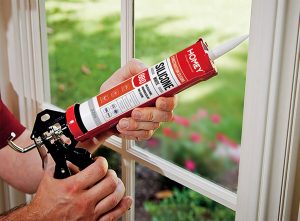
Construction joints are continually exposed to temperature changes, movement, moisture, and other environmental stresses. Lack of appropriate sealing compounds causes cracking, moisture leakage, and maintenance issues. The proper choice of elastic joint sealant allows constructors, distributors, and importers of construction materials to enhance building durability and meet project specifications.
The need for high-quality sealants provides market opportunities in the United Arab Emirates, Brazil, Mexico, Chile, Argentina, Peru, Venezuela, and Colombia. Nevertheless, climatic features, construction processes, and sealant requirements differ in these countries. Buyers should take into account elasticity, adhesion, weatherability, packaging, and supplier reliability prior to placing an order.
Elastic Joint Sealant for the UAE and Latin American Markets
An elastic joint sealant is supposed to provide an elastic seal and accommodate movement between the neighboring building elements. It can expand and shrink within the designated movement range and help avoid gaps between building materials due to movement.
These may involve concrete expansion joints, façades, perimeters of windows and doors, precast concrete panels, and selected joints between floors and walls. The correct formulation would depend on the type of substrate, the size of the joint, amount of movement expected, and environmental exposure conditions.
When using this product in the UAE, the consideration of UV resistance and temperature requirements becomes very essential due to the harsh environment conditions. One should consider storage conditions that would be suitable for the product to avoid damage while in transport.
Humidity and rainfall can affect Brazil, Colombia, and Venezuela. This calls for the importation of weatherproofing sealants and confirmation of their suitability to the environmental conditions and substrates.
Mexico, Chile, Argentina, and Peru have varying climatic conditions depending on regions. Instead of choosing products based on the destination country, procurement personnel should select products suitable for the prevailing conditions in the projects.
This would assist the distributors dealing in this market by providing sealants of varied types and giving the technical data about them.

How to Choose Elastic Joint Sealant for Different Applications
The selection of an elastic joint sealant involves more than a cost comparison. The buyer must consider the following technical requirements before approval of a material.
Joint Movement Capability
Building materials expand or shrink when there is a temperature variation. Structural settlement and vibrations could cause changes in the size of the joints. A proper sealant should have sufficient capacity to absorb this type of movement.
The seller must be asked about the movement capability of the material. You could check this information from the technical data sheets of the manufacturer. Otherwise, you could risk failure because of poor joint sizing or inadequate movement capability.
Adhesion to Construction Materials
Building constructions may use concrete, masonry, aluminum, glass, wood, or coated metal. These materials have different surface properties and the sealant should match their needs.
Dust, oils, particulates, and other foreign materials may negatively impact adhesion. Consumers are advised to consult guidelines on the required surface preparation and whether a primer is needed. It is helpful to perform pre-installation adhesion tests for unknown substrates or larger jobs.
Weather and Temperature Resistance
External joints could be subject to sunlight, rain, humidity, and temperature fluctuations. An elastomeric joint sealant should have proven performance qualities that make it suitable for the expected exposure.
For projects in the UAE, UV and temperature stability are of special concern. For tropical and humid areas in Brazil, Colombia, and Venezuela, moisture resistance is particularly relevant.
Selection should always be made based on the manufacturer’s specifications, not on common perceptions of a certain sealant technology.
Curing Time and Application Conditions
Curing time influences construction timing and is a factor that determines when the sealed joint will be ready to withstand movement or weather. This depends on the formula, the size of the joint, temperature, and humidity.
Contractors should adhere to application temperatures, joint preparation procedures, and curing conditions. They should find out whether there are any limitations on the use of backing material, painting, etc.
Elastic Joint Sealant Types: Silicone, Polyurethane, and MS Polymer
There is more than one type of chemistry of joint sealant and each has its own performance parameters. Awareness of the types is important to develop a proper product portfolio for importers.
Silicone Elastic Joint Sealant
Silicone sealants are popular for glazing, windows, doors and exterior perimeter joints. Numerous formulae of sealants ensure resistance to UV light and weather.
However, all silicone products are not appropriate for all substrates and paint systems. Adhesion, movement capacity and allowed areas of applications have to be verified by buyers.
Polyurethane Elastic Joint Sealant
Polyurethane sealants are widely applied in selected concrete joints, precast panels and other construction applications, where flexible adhesion is needed.
However, applicability of the polyurethane sealants depends on the particular formula of sealant, substrate preparation, moisture conditions and possible movement. Interior or exterior application and possibility of painting after curing are some of the factors that have to be checked by buyers.
MS Polymer Elastic Joint Sealant
MS polymer sealants may unite flexibility, adhesion properties and applicability convenience. Certain types of products may be used for concrete, metal, wood and other compatible substrates.
MS polymer-based products could be a good choice for distributors catering to different clients in the construction industry alongside silicone and polyurethane products. The choice of products has to be based on the proven results of their effectiveness in various applications rather than a belief that there is such a product which is capable of handling everything.

Elastic Joint Sealant Procurement for the UAE and Latin America
In addition to evaluating the price for the product for buyers from the UAE and Latin America, the following factors could have an effect on the total purchase cost.
Check Technical Documentation and Quality Control
Ask for the technical data sheet, the safety data sheet, application instructions, shelf life and all existing test results. In case of specific performance requirements in the projects, make sure that there are required documentation for the product in question.
For instance, for the product specified as an elastomeric joint sealant under the ASTM C920 standard the buyer needs to ensure that it is the right classification and there are required test results for the product. Consistency of the batches and quality control in manufacturing are crucial for repeat orders.
Compare Packaging and Shipping Costs
The types of packaging may involve cartridges and sausage type for larger volumes depending on the formulations used and how it will be dispensed.
The buyers must choose the right packaging in line with the needs of the contractors and the local distribution channel in addition to considering local consumption.
Prior to purchasing the elastic joint sealant, it is necessary to ensure that details of carton size, number per carton, shelf life, storage instructions, and shipping documents are clear.
Landed cost including the freight, insurance, customs duties, local handling costs, and any wastage from the products should be determined by importers.
Evaluate Supplier Flexibility
The supplier should be able to explain the various grades of products and assist buyers in selecting an appropriate one based on application.
Export packaging, product information, technical advice, and discussion on customized packages for buyers in the UAE, Brazil, Mexico, Chile, Argentina, Peru, Venezuela, and Columbia markets can prove useful.
The buyers must know the minimum order quantity, samples, production time frame, payment terms, and procedures for handling quality complaints before committing to purchase.
Elastic Joint Sealant Installation Mistakes to Avoid
Even a top-notch elastomeric joint sealant may fail if the installation procedure is not proper.
Improper surface preparation: Dust, oils, moisture, and loose particles could impair the bond. Surfaces have to be prepared in accordance with the manufacturer’s recommendations.
Wrong joint dimensions: Too deep or too narrow joint may render the sealant unable to cope with the movement. Joint geometry has to comply with the project requirements.
Three-sided bonding: In case when the sealant is bonded not only to the sides of the joint but to its bottom, movement may cause too much internal stress. Bond breaker or backing material will help to avoid unnecessary bottom bonding where necessary.
Adverse application environment: Rainfall, contamination, adverse temperatures or other unfavorable conditions can influence application and curing process.
Premature exposure: It takes time for the sealant to cure. Premature movement, contact with water or finishing work may diminish the effectiveness of sealant.
The contractors have to observe the manufacturer’s instructions and inspect the work after the sealant application.
FAQ About Elastic Joint Sealant
How is elastic joint sealant applied?
This type of joint sealant is used for sealing those joints which may have movement. Some of its common applications include concrete expansion joints, facade interfaces, window periphery, doorframes, and select wall-floor joints.
What elastic joint sealant is recommended in the hot climate like UAE?
It depends upon the type of substrate and movement of joint along with exposure conditions. Buyers should always make sure that the products they choose are suitable in terms of UV resistance, temperature, weather resistance and adhesion performance in case of exterior applications.
Which type is better for concrete joint application: silicone or polyurethane?
None of them is better than other because there are certain types of polyurethane and MS polymers which are used for construction joints whereas silicone is mostly used for weather proofing and glazing applications.
Can one type of elastic joint sealant be suitable for all Latin American countries?
There may be a single product which suits different countries depending upon their conditions and requirements but there may be requirement of different types due to the difference in climatic conditions of those countries.
What is required from a manufacturer of joint sealants?
It is necessary to ask a manufacturer of joint sealants to provide a technical datasheet, safety datasheet, test results, shelf-life and storage conditions, packaging specifications, batch traceability, as well as purchasing terms. Samples and preliminary tests of adhesion are helpful to decrease procurement risks.
Conclusion
Selection of a suitable joint sealant depends on the compromise between movement capacity, adhesion properties, weather resistance, application method, and overall cost. Purchasers in UAE, Brazil, Mexico, Chile, Argentina, Peru, Venezuela, and Columbia need to consider conditions of their projects in each case rather than choose a suitable product based on its description and quotation only.
When you are importing construction materials or work with a distributor or construction company, it would be convenient to cooperate with a supplier offering a variety of silicone, polyurethane, and MS polymers sealants and adhesives. Learn more about Homey’s sealant and adhesive solutions for construction at Construction Sealant Manufacturer | Homey Adhesives.