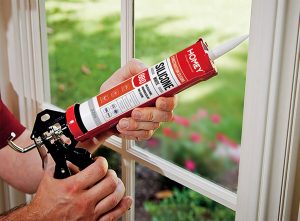
When renovating, we all want clean, beautiful walls. But once you drive a nail, it leaves a hole. Drilling into tiles or PVC panels can even cause cracking. Isn’t there a way to fix things firmly without damaging the surface? The answer is yes – zero nail construction adhesive.
Today we’re introducing Homey L322 Zero Nail Construction Adhesive, a product designed specifically to replace nails. It features a synthetic rubberbased, solventbased formula with extremely high initial tack, suitable for a wide range of building materials, and it is noncorrosive. Whether you are a professional installer or a DIY enthusiast, you can easily achieve nailfree installation with this product.

What is zero nail adhesive? Why is it better than nails?
Traditional nails or screws are strong, but they have obvious disadvantages:
- Damage to walls, panels, tile surfaces
- Dust from drilling
- Ugly holes left after removal
- Risk of cracking hard or brittle materials (such as tiles or PVC)
Zero nail adhesive is a highviscosity, fastgrabbing construction adhesive. Within minutes it “grips” the object, and after full curing it achieves extremely high bond strength. Most importantly: no drilling, no surface damage, and easy removal (using alcohol or a dedicated adhesive remover).
How does zero nail adhesive work?
- Surface wetting – Under pressure, the adhesive penetrates microscopic pores of the substrate, forming a mechanical lock.
- Solvent evaporation – As the solvent evaporates, synthetic rubber molecules entangle, creating strong cohesion.
- Fast initial grab – Shortly after application, the adhesive holds the object without needing longterm support.
- Full cure – After full curing, the strength is very high and can bear heavy static loads.

Key advantages of Homey L322
- Extremely wide range of substrates – Bonds wood, MDF, particle board, PVC panels, masonry, concrete, tiles, metals, most plastics, rubber, glass, and more.
- Water and weather resistant – After curing, it withstands moisture and temperature changes, suitable for indoor and outdoor use.
- Fast positioning – Grabs quickly after application; no need for prolonged pressing.
- Paintable – Once fully cured, the surface can be painted to match the substrate.
- Noncorrosive – Does not attack metals, plastics, or PVC.
- Easy gunning – The paste has good consistency and can be applied with a standard caulking gun.

Common household uses: PVC panels, decorative boards, skirting boards – say goodbye to nails
Of course, this adhesive can also be used for small mirrors (e.g., bathroom vanity mirrors, fulllength mirrors) – apply a few dots on the back, press against the wall, and release. It won’t slide down, and after curing the mirror stays secure without any mirror nails. However, the focus of this article is panel applications:
PVC panels / plastic panels for ceilings or walls
Traditionally, PVC wall panels or ceiling planks are fixed with small nails or staples, leaving visible marks that can rust over time. With L322: apply a few adhesive dots on the back of the panel, press onto the furring strips or wall, release – it stays. After curing, it’s ready for normal use. Especially suitable for damp areas like bathrooms and kitchens, as L322 offers water and mold resistance.
Skirting boards (PVC or solid wood)
Using a nail gun on skirting boards leaves nail holes that need putty and paint, and over time the boards may loosen. Apply L322 on the back of the skirting board (Sline or dots), press onto the wall, and use tape to hold temporarily for a while. Removal is easy and does not damage the wall or the skirting board.
MDF / density board feature walls
TV feature walls or headboard walls often use MDF trim or shaped panels. Using zero nail adhesive eliminates drilling into the wall; the fast grab improves work efficiency. The cured adhesive remains elastic, accommodating minor expansion and contraction of the panels due to temperature/humidity changes.
Other panel applications
Woodplastic composite (WPC) – For balconies and exterior decorative panels, good weather resistance.
Plywood / multilayer panels – For furniture back panels, cabinet reinforcement.
Gypsum board – Does not damage the paper surface, avoids cracking around nail holes.

How to use zero nail adhesive correctly (three steps)
1.Clean the surface
Wipe the wall and the back of the panel with alcohol or a cleaner to ensure they are free of oil, dust, and water. Dryness is essential for good adhesion.
2.Apply the adhesive
Load L322 into a caulking gun, and apply in an Spattern, dots, or beads on the back of the panel (for large panels, use multiple dots spaced 15–20 cm apart). Do not apply too thinly.
3.Press and fix
Press the panel against the wall firmly for a few seconds. Because L322 has high initial tack, it will usually stay in place when you let go. For heavy panels on vertical surfaces, it is advisable to use tape or supports overnight to achieve optimal strength.
⚠️ Note: The application temperature should ideally be above 5°C. For wet or submerged conditions, allow the adhesive to cure fully (recommended 72 hours) before exposure to water.

What to look for when choosing a zero nail adhesive?
- Initial grab – Can it hold quickly? A good adhesive fixes within a short time.
- Final strength – After full cure, the strength must be sufficiently high.
- Material compatibility – Does it attack PVC, plastics, or mirror backing paint?
- Temperature range – Can it handle -10°C to +90°C?
- Color options – Translucent for lightcolored or transparent panels; white/beige for general use.

Why Homey L322 is a smart choice for panel installation
- High initial strength – Provides reliable grab within minutes after application; small items stick on contact.
- Excellent final strength – Each adhesive dot supports 20–30 kg (typical value), more than enough for everyday use.
- Fast skinning – <10 minutes skin time allows quick progress to next steps.
- Wide temperature range – -10°C to +90°C; works in cold winters and hot summers.
- Multiple colors – White, beige, translucent available to match different substrates.
- Stable storage – 12month shelf life under proper conditions.

Conclusion
If you are tired of drilling holes to fix PVC panels, skirting boards, or decorative trims, or if you want to improve work efficiency on site and reduce rework, try Homey L322 zero nail adhesive. It protects the integrity of your surfaces while saving time and money.
Say goodbye to nails – start with a cartridge of zero nail adhesive.
Interested in samples or more technical details? Please contact the Homey technical team or your local authorized distributor.
Frequently Asked Questions (FAQ)

1. Can this adhesive bond PVC panels?
Yes. L322 adheres well to most rigid PVC and foamed PVC. We recommend a small compatibility test first.
2. Can it be used outdoors?
Yes. Its service temperature range is -10°C to +90°C, and it is water and weatherresistant, suitable for outdoor use. However, continuous water immersion is not recommended.
3. If I want to remove a panel later, can I clean off the adhesive?
Yes. Soak the adhesive with alcohol, essential oil, or a dedicated adhesive remover, then gently scrape with a plastic scraper.
4. What is the difference between translucent and white/beige?
The translucent version becomes nearly invisible after curing, ideal for transparent or lightcolored panels. The white/beige versions are suitable for opaque substrates; strength is similar.
5. How much weight can it hold?
One adhesive dot about 2–3 cm in diameter (approx. 5 grams), after full curing, typically supports a static load of 20–30 kg. Multiple dots increase the capacity.
6. Can it be used in humid environments (e.g., bathrooms)?
Yes, but allow the adhesive to cure fully (recommended 72 hours) before exposing to water. L322 offers water and mold resistance.
7. Does it have an odor?
There is a mild solvent odor during application. Work in a ventilated area. The odor disappears after curing.
8. Can it be painted over?
Yes. Once fully cured, the surface can be painted with waterbased or solventbased paints.
9. What are the storage conditions?
Store sealed in a cool, dry place below 25°C, away from direct sunlight and heat sources. Shelf life is 12 months.
10. Can it be used for mirrors?
Yes. Light to medium mirrors (e.g., vanity mirrors, fulllength mirrors) are very suitable for installation with this adhesive – we recommend the translucent version.