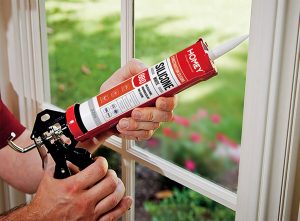
When performing construction during winter, the biggest challenge that experts face is ensuring that materials stay well attached. Cold weather changes the behavior of adhesives, especially PU adhesive foam. If you’re trying to get a good, solid, reliable hold when it’s cold outside, the right techniques — and the right foam — are what you require. In this guide, we will show you how to maximize PU adhesive foam in cold weather and how Homey 90 is the perfect product to use in cold weather.
But before we discuss why cold weather is so difficult to begin with.

Why Cold Weather Makes PU Adhesive Foam More Difficult to Handle
Anyone who has ever used PU adhesive foam will understand the significance of temperature. Under warm conditions, PU foam expands and cures rapidly, sticking well to surfaces. But under cold conditions, it is a different case.
PU adhesive foam needs air humidity to harden. Cold air has lower humidity, and this slows down hardening. This means that the foam stays soft for longer and never reaches its full strength as rapidly.
Additionally, if the foam is applied in cold conditions, the propellant in the can loses pressure. This makes the foam harder to dispense evenly, affecting coverage and bond quality.
A second problem is the temperature of the surface. If the materials you are bonding are too cold or even frozen, you won’t get the foam to stick at all. This is especially true with smooth or non-porous surfaces like metal or glass.
So how do you avoid these issues? The answer begins with employing a product that’s designed for the task.
Why Homey 90 is the best PU Adhesive Foam for Cold Weather
While other foams are damaged by low temperatures, Homey 90 PU adhesive foam has been specifically designed to operate even under freezing conditions. It contains a special formula that can be applied as low as –18°C and as high as +35°C — well below most standard foams, which actually break down a good deal below 5°C.
This cold-resistant foam possesses great expansion and adhesion strength in cold working environments. It also possesses quick tack time — about 10 minutes — that is convenient when you need to guarantee the flow of projects even during cold times. That initial bond strength is particularly crucial when you are operating on surfaces like concrete, wood, brick, and metal.
Homey 90 also comes with a low-expansion formula. That is, it expands into cavities without excessive expansion, a factor that can be a consideration when installing in tight spaces or fine installations. And with its compatibility with a variety of materials, from polystyrene panels to gypsum blocks, it’s a good choice for a variety of cold-weather installations.
And lastly, you’ve got the right foam, then you need to get your surfaces ready. So, what do you do first prior to application?

How to Pre-treat Surfaces for PU Adhesive Foam in Cold Weather
Even the strongest PU adhesive foam won’t adhere without surface preparation. Preparation is particularly necessary in winter, when ice, water, and dirt can all compromise adhesion.
First, always clean surfaces. Oil, loose debris, or dust must be brushed away or wiped clean with a cloth. Where there is frost or ice, it must be cleared away — foam will not adhere to frozen surfaces.
Second, very lightly spray the surface with a water spray. It may seem strange in cold weather, but PU adhesive foam does need a little water to cure. A light spray would suffice — don’t get the surface wet.
Lastly, make sure the foam can is warm enough to use. If it was stored in a cold garage or truck, bring the can indoors and let it reach room temperature. Heating the can provides smooth flow and consistency of the foam during application.
Now that your surfaces are ready and your foam is prepared, it’s time to get started. But how do you apply foam when it’s cold outside?
PU Adhesive Foam Application Techniques That Work in Cold Weather
Using PU adhesive foam in winter is not the same as using it on a sunny day. Below are the steps to take to achieve the best results:
1. Shake the Can Well
Always. Shake the can at least 40 seconds before opening. This incorporates ingredients well and improves foam quality.
2. Control with a Foam Gun
A foam gun gives you better control and precision, especially in gloves when it is cold. It uses less and gives a neater finish.
3. Bottom-Up Work Closing Gaps
Use foam from bottom to top. This avoids air pockets and allows the foam to expand in an even manner within the space.
4. Don’t Overfill Gaps
PU adhesive foam expands upon curing. Expansion can be somewhat delayed at low temperatures, but still cause pressure or misalignment of materials if overfilled. Less is more.
5. Include Additional Curing Time
Even with quick-cure foams such as Homey 90, anticipate a slightly longer curing time in cold weather. Trim or finish at least one hour later.
With these steps followed, one can avoid the usual problems. But what if something goes wrong?

Mistakes to Avoid When Applying PU Adhesive Foam at Low Temperatures
Even experienced professionals can struggle to work in temperatures below zero. These are the most common mistakes — and how to avoid them:
Using Cold Foam
Cold foam, which is too cold, won’t run. Always heat up the can to approximately 20°C prior to use.
Use on wet or frozen surfaces.
Moisture is okay — ice is not. Always scrape frost or ice off surfaces prior to spraying foam.
Removing the Moisture Mist
Cold air can be dry, and this slows curing. Very lightly misting the surface will cause the foam to stick and cure.
Overfilling or Rushing the Task
In a rush, it is easy to put on too much foam or skip curing time. But stick with it — let the foam cure before trimming or loading.
By doing it correctly, you will save time, money, and frustration. So why should you employ Homey for your PU adhesive foam needs?
Why Homey for Cold Weather PU Adhesive Foam Applications
There are a variety of PU adhesive foams out there, but they won’t all withstand extreme winter conditions such as Homey 90. It’s specifically engineered to provide performance when temperatures are below freezing — without sacrificing bond strength or dependability.
Don’t compromise with a can of foam on Homey — you’re buying a product field-tested for real construction problems in the real world. Its high adhesion, low expansion, and wide material compatibility make it the best option on the market for the pro who must work in extreme conditions.
Apart from that, Homey also offers excellent customer service and support around the world. From building houses, insulating buildings, to sealing panels against sub-freezing temperatures, Homey 90 is the one you can rely on to get the job done to perfection.
And so what is the final conclusion from all of this?
Final Words
There is no need to let cold weather bring your project to a standstill. Proper preparation, proper technique, and a top-notch product such as Homey 90 PU adhesive foam will enable you to maintain your workflow to its optimal level throughout the year — rain or shine.
From prep to foam application, it’s all about the details. And using a foam designed for cold, you won’t have to stress over weak bonds, curing issues, or wasted material.
If you’re operating in cold winter conditions and you require a foam that will perform, turn to our team at Homey. We’re always happy to help you find the solution you need for your next project — and we’ll ensure your adhesion will hold up to whatever Mother Nature has in store for you.
Need to schedule or have a question? Contact us today and let us get your job site ready for winter.
Frequently Asked Questions (FAQs)
1. What is PU adhesive foam used for?
PU foam adhesive is used to bond materials, including wood, concrete, brick, gypsum board, and insulation panels, in the building and renovation process.
2. Can PU adhesive foam be used at low temperatures?
Yes, some of them, like Homey 90, are designed to operate as low as –18°C temperatures.
3. What is the ideal temperature for applying PU adhesive foam?
Most PU foams have the ideal temperature range of +10°C to +25°C, but there are some, such as Homey 90, which are useful in very low temperatures.
4. How long does it take to cure PU adhesive foam in cold weather?
For cold temperatures, PU foam adhesive will dry more slowly, typically 1 hour or longer before cutting. Tack-free will be 10 minutes.
5. PU adhesive foam is applicable to frozen surfaces.
No, foam won’t adhere well to icy or frozen surfaces. Soften and ready surfaces to get dry and clean first before use.
6. Do I need to use water when applying PU foam in the winter?
Yes, lightly spraying surfaces with water will enable the foam to cure properly in cold, dry environments.
7. Is the foam able to be heated up before use?
Indeed, heating the can to room temperature improves foam flow and expansion.
8. Is PU adhesive foam water-resistant once cured?
Yes, most PU foams, such as Homey 90, are water-resistant when hardened and thus can be utilized both indoors and outdoors.
9. Is PU adhesive foam compatible with plastic and metal?
Yes, PU foam adhesive will bond to metal, UPVC, and most plastics — but not PP, PE, or Teflon.
10. Why would I use Homey 90 for winter work?
Homey 90 is designed for cold-weather applications, with excellent cold-weather workability, good adhesion, and uniform cure — even below sub-freezing conditions.